
You're new to lifting. That means you're sitting on the fastest strength gains you'll ever make in your life, and most people waste them on machines, cables, and workout routines pulled from a fitness magazine. A beginner barbell program fixes that. It puts you under a barbell three days a week and adds weight every single session. Linear progression — the ability to get stronger workout to workout — only exists at the beginner stage. After a few months of consistent training, that window closes. The barbell is the tool that lets you train the entire body through large, multi-joint movements: squat, press, deadlift. Nothing loads the skeleton, recruits muscle mass, or builds functional strength faster. The program isn't complicated. That's the point. Simple, measurable, progressive. You show up, you lift more than last time, you go home. Done correctly, a beginner barbell program will produce more results in 12 weeks than most people see in two years of gym wandering.
What Is a Beginner Barbell Program?
A beginner barbell program is a structured resistance training plan built around the barbell and a small handful of compound movements. Squat, deadlift, press, bench press. That's most of it. The goal is simple: add weight to the bar as frequently as possible while the body will still allow it.
This is called linear progression. Beginners can recover from a training session within 48 hours and come back stronger. That's a physiological fact, not a motivational concept. A properly designed program exploits that window by training each lift multiple times per week and adding 5–10 pounds per session. No intermediate or advanced lifter gets to do this. Beginners should take full advantage of it while it lasts.
The scope is deliberately narrow. You're not training athleticism, sport-specific skills, or aesthetics — at least not directly. You're building a strength base. Everything else improves downstream from that base. Muscle mass, body composition, joint integrity, work capacity — all of it responds to getting stronger under a barbell.
Context matters here. "Beginner" doesn't mean weak or uncoordinated. It means your body hasn't yet adapted to barbell loading. A former college athlete walking into a gym for the first time in ten years is still a beginner by this definition. The nervous system needs to learn the movements. The connective tissue needs to adapt. Progress is fast precisely because so much adaptation is still available.
Three days a week. Full-body sessions. Compound lifts. Add weight. That's the framework.
Key Benefits of a Beginner Barbell Program
A beginner barbell program works because it matches the tool to the trainee. You're new. Your body will respond to almost any stress you put on it. A barbell program exploits that aggressively.
You get stronger fast. Linear progression — adding weight every session — is only possible for a short window in your training life. Beginners live in that window. A well-run program like Starting Strength or StrongLifts puts 5 pounds on the bar each session. Do the math over 12 weeks. That's real strength, not the kind you post about.
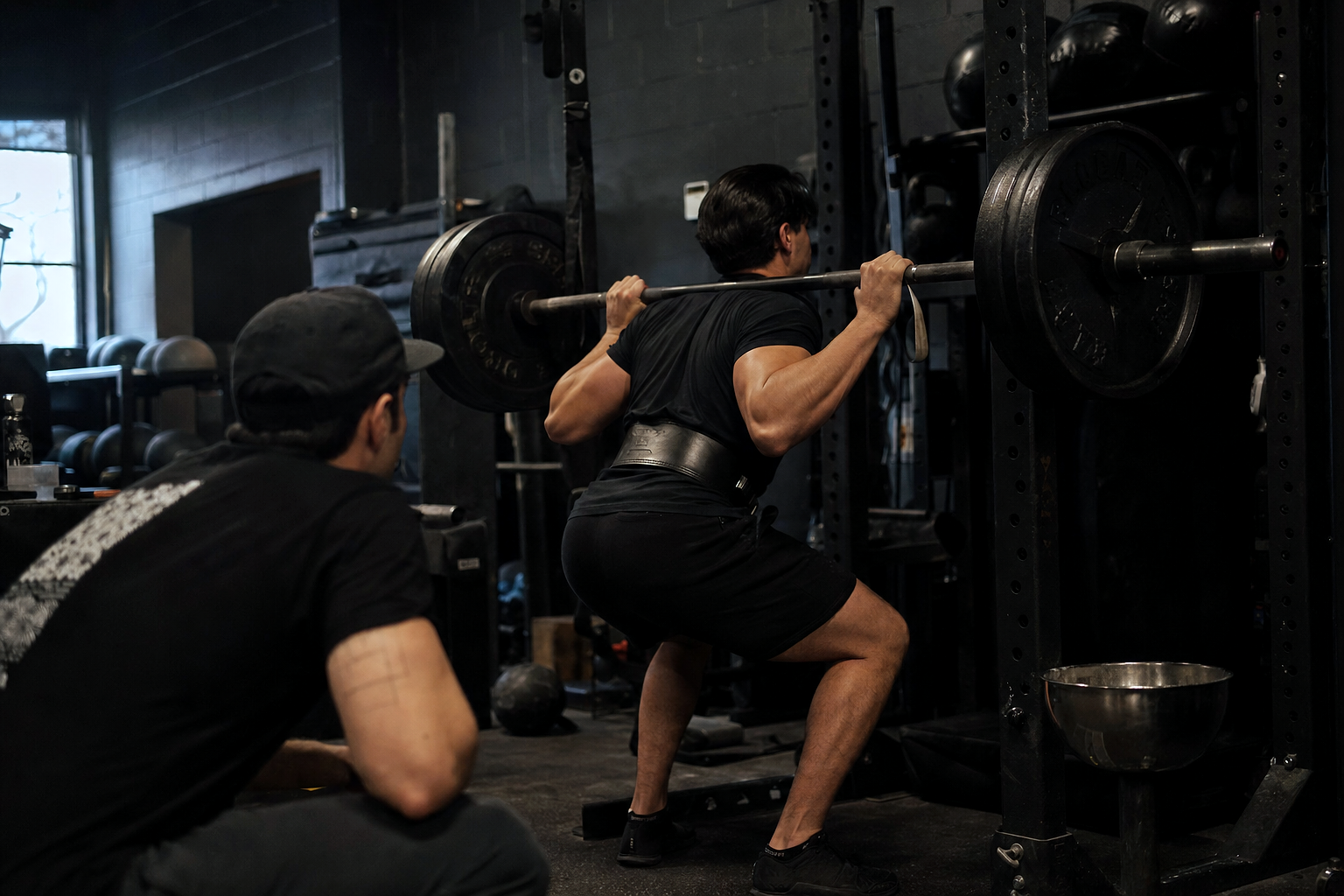
The barbell trains the whole body. A squat isn't a leg exercise. It's a full-body lift that loads the spine, demands trunk stability, and drives systemic hormonal response. Three compound movements done heavy produce more useful adaptation than 15 machines ever will. You're building a body that functions, not just one that photographs.
The movements transfer. Squat, deadlift, press, row — these patterns show up everywhere outside the gym. Pick something heavy off the floor. Put something overhead. Carry it. A beginner barbell program makes all of that easier because it trains the actual mechanics of human movement under load.
The program is simple to follow. Three days a week. A handful of lifts. Clear progression rules. Beginners don't need complexity — they need consistency and a plan that tells them exactly what to do when they walk in the door. Most people fail because they improvise. This removes that problem.
You build a training base everything else sits on. Cardio improves. Body composition shifts. Injury resilience increases. The strength you build in the first six months of a beginner barbell program becomes the floor your entire athletic life is built on. Start here.
How a Beginner Barbell Program Works
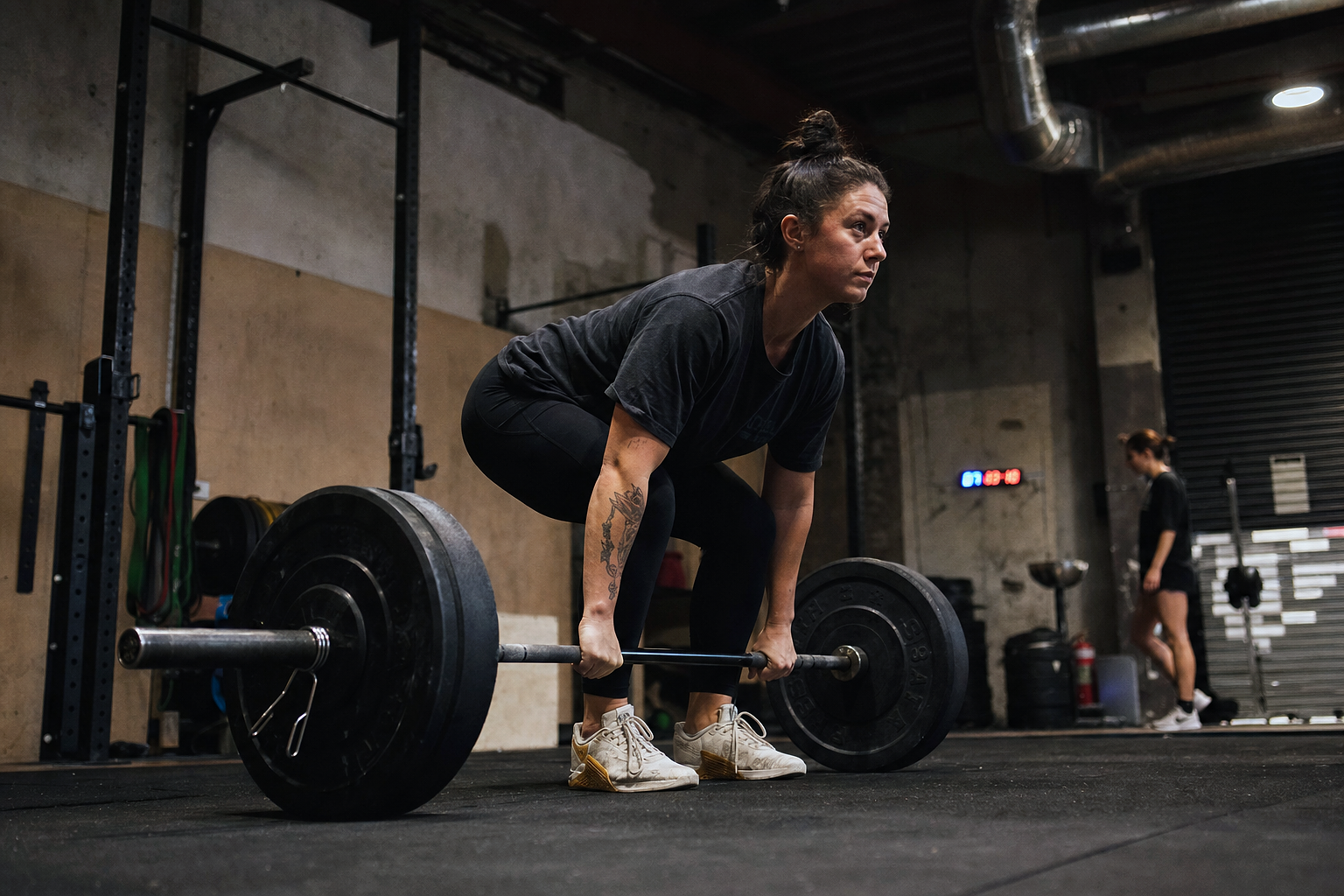
The mechanism is simple. You lift a weight, recover, come back slightly stronger, lift more weight. Repeat until you're not a beginner anymore.
That's it. That's the whole thing.
The technical term is linear progression. Your body responds to a training stress by overcompensating — rebuilding muscle and connective tissue slightly above baseline so next time the same load feels easier. A beginner barbell program exploits this by adding weight every single session, typically 5 pounds on the big lifts like squat and deadlift, sometimes less on the press.
Here's the sequence:
Session 1: You squat 95 pounds. Hard but manageable. 3 sets of 5 reps.
Session 2: You squat 100 pounds. Same structure.
Session 3: 105 pounds.
You do this two or three times per week. The core movements — squat, press, deadlift, bench — rotate across sessions so each lift gets trained frequently while you still have time to recover. Most beginner programs use an A/B alternating structure. Day A might be squat, press, deadlift. Day B swaps press for bench and adjusts accordingly.
Recovery happens between sessions, not during them. Sleep, food, and protein aren't optional accessories — they're where the actual adaptation occurs. Train hard, eat enough, sleep. Skip any leg of that and the program stalls.
This works because beginners are uniquely positioned to recover within 48 hours. You're not strong enough yet to cause damage that takes longer to repair. That window closes eventually, which is why intermediate programming gets more complicated. But right now, you can add weight every session and your body will keep up.
The barbell is the tool. Progressive overload is the mechanism. Consistency is the only thing that determines whether this works for you or not.
Common Questions About Beginner Barbell Program
How long does a beginner barbell program last?
Anywhere from 3 to 6 months. It depends on how consistently you train and how aggressively you eat. Some lifters squeeze 9 months out of it. Don't rush to intermediate programming before you've exhausted your beginner gains — that's leaving free progress on the table.
How many days per week do you train?
Three. Monday, Wednesday, Friday works. The rest days matter as much as the training days. Recovery is when you actually get stronger.
What if you miss a session?
Train the next day. Don't double up, don't panic. One missed session won't kill your progress. A week of missed sessions starts to matter.
Do you need to eat a lot?
Yes. You're trying to add muscle and recover from hard training. Undereating is the most common reason beginners stall. Get enough protein — 0.7 to 1 gram per pound of bodyweight daily — and eat enough total calories to support weight gain if you're underweight or at maintenance.
Can women run a beginner barbell program?
Identical program, identical progression logic. Women add muscle and strength through the same mechanism men do. The weights start lighter; the principles don't change.
What if the weight stops going up?
First, check sleep, food, and stress. Those cause most stalls. If everything is in order, you've likely run out your linear progression and need a reset or a program adjustment. That's normal. It means the program worked.
Conclusion
A beginner barbell program works because it's simple, not despite it. You add weight, you recover, you repeat. That's the whole model. Complexity comes later — after you've earned it.
Here's what matters: pick a program with the big compound lifts, train three days a week, eat enough to support progress, and sleep. Don't rotate exercises every session. Don't chase soreness. Don't film yourself for six months.
The trainees who make the best progress are the ones who show up consistently and do boring work without flinching. Turns out discipline is a better predictor of results than programming genius.
Your next step is straightforward. Choose one beginner barbell program — Starting Strength, StrongLifts, GZCLP, take your pick — and run it for 12 weeks without modifying it. Track your lifts. Hit your numbers.
The bar doesn't care about your intentions. Load it and lift.
Learn more about Strength Programming.