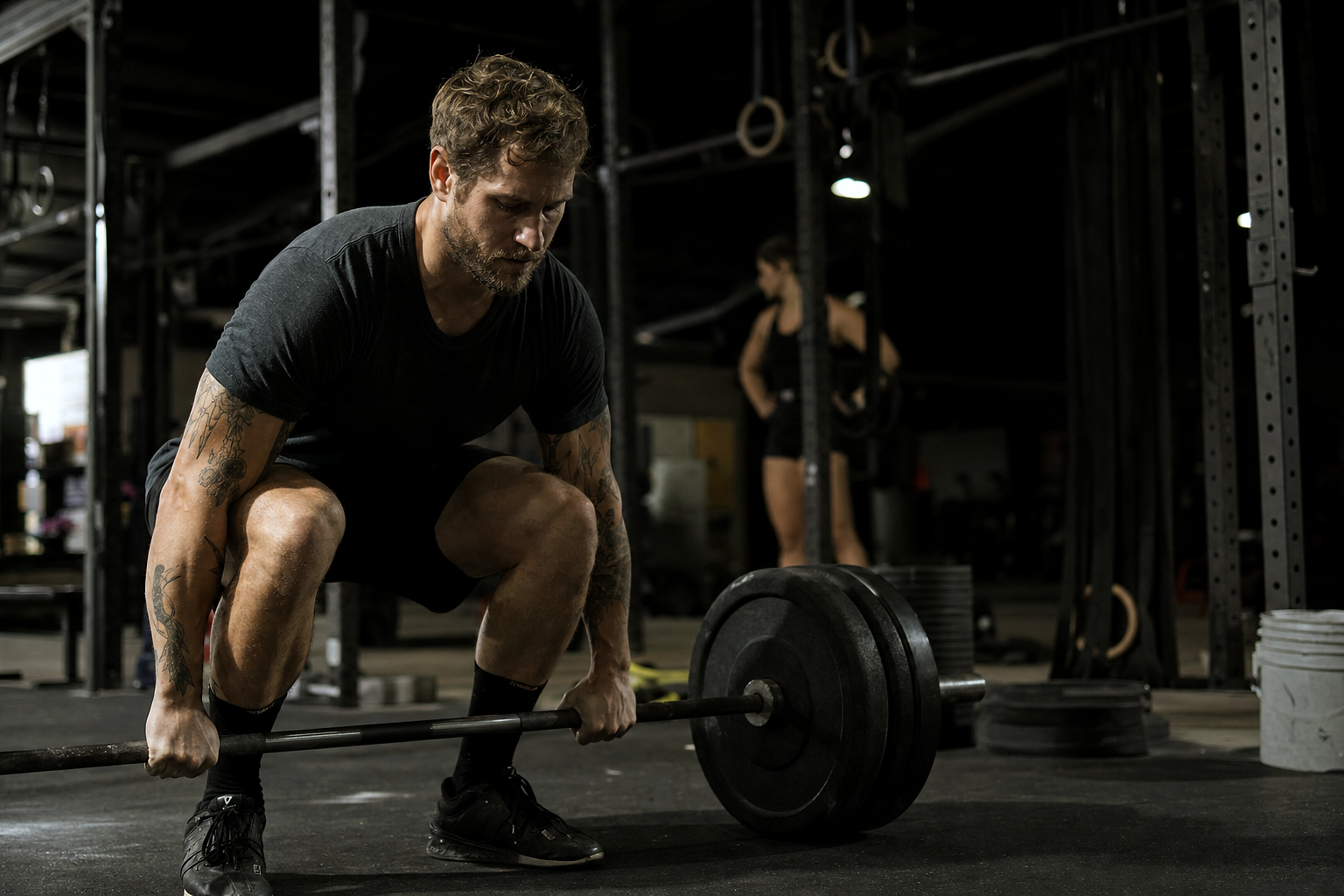
The deadlift is the simplest test of absolute strength that exists. You pick up a heavy thing. If you can't pick up more than you could six months ago, something in your training is broken. Learning how to increase your deadlift isn't complicated, but it does require you to stop guessing and start being systematic about a few things that actually matter: load progression, technique, recovery, and accessory work that targets your real weak points. Most lifters stall not because they've hit a genetic ceiling but because they've been doing the same weight, the same way, for too long. Fix the programming, fix the movement, get stronger. That's the whole deal. The deadlift also rewards improvement more visibly than almost any other lift — 50 pounds added to your pull means something real, both on the platform and in how your body functions outside the gym.
What Is How to Increase Deadlift?
The deadlift is simple. You pick a heavy bar off the floor. You put it down. You add weight next time.
That's the whole game — except it isn't, because most lifters stall out long before they reach their actual ceiling. Knowing how to increase deadlift means understanding why progress stops and what specifically fixes it.
This isn't about one trick or a new accessory movement you found online. Increasing your deadlift is a systematic process involving programming, technique, recovery, and targeted weak point training. Each variable matters. Ignore one and the others carry only so far.
The deadlift pulls more total muscle mass into one movement than almost anything else in the gym. Your posterior chain — hamstrings, glutes, spinal erectors — drives the lift. Your lats, traps, and grip hold it together. When any link in that chain is the limiting factor, the whole system fails at a predictable point: off the floor, at the knee, or in lockout. The sticking point tells you where to look.
Context matters here. A raw beginner adds weight every single session with almost no effort. An intermediate lifter needs smarter weekly programming. An advanced lifter plans in months, not weeks. The strategies that work depend entirely on where you currently sit.
This guide covers the full picture — from technique mechanics to programming structures to accessory work that actually transfers. The goal is a bigger number on the bar, built on a foundation that holds.
Key Benefits of How to Increase Deadlift
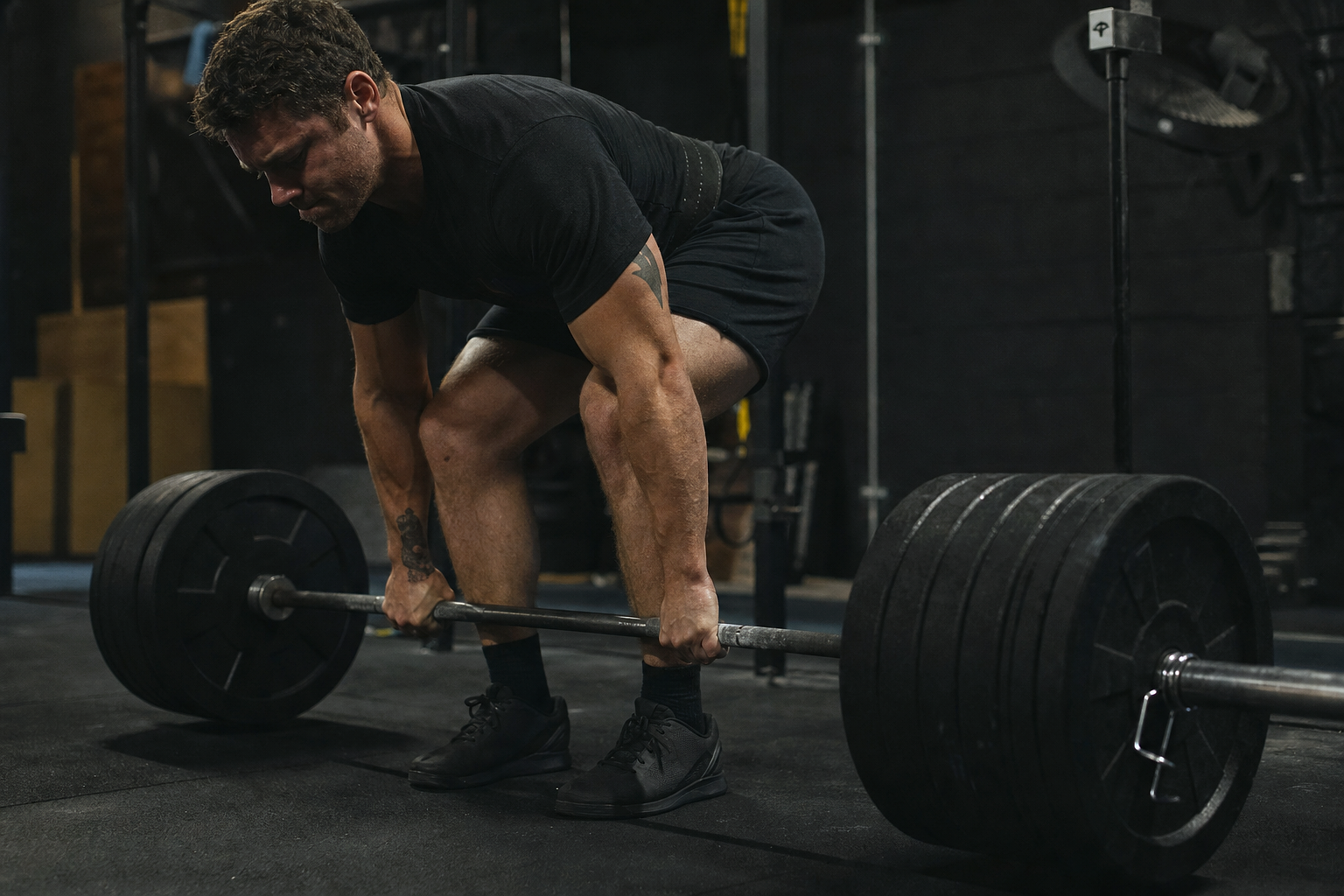
A stronger deadlift pays dividends everywhere else. That's not a sales pitch — it's mechanical reality.
You build total-body strength that transfers. The deadlift is a full posterior chain movement. Hamstrings, glutes, spinal erectors, traps, lats, forearms — everything gets taxed simultaneously. When you increase your deadlift, those muscles get stronger across the board. That strength shows up in your squat, your rows, your carries, and frankly in how you feel getting out of a car.
Your posterior chain becomes bulletproof. Weak hamstrings and underdeveloped erectors are responsible for more back injuries than almost any other deficiency. A systematic approach to increasing your deadlift progressively loads and reinforces exactly those structures. You're not just lifting more weight — you're building the tissue that protects your spine under real-world stress.
Grip strength goes up automatically. Pull heavy things off the floor consistently and your grip adapts. No isolation work required. Stronger hands carry over to every pulling movement you'll ever do.
Your hormonal response improves. Heavy compound lifts drive testosterone and growth hormone output more effectively than isolation work. More total muscle mass recruited means a greater systemic training effect. This is basic exercise physiology, not bro science.
You get objective feedback on your programming. The deadlift is honest. Either the bar leaves the floor or it doesn't. When you track and increase your deadlift over time, you have a clear, quantifiable measure of whether your training is actually working. Most lifters need that anchor.
Body composition shifts without much extra effort. More muscle mass burns more calories at rest. A 400-pound deadlift requires significantly more tissue than a 200-pound deadlift. Build the strength, and the physique tends to follow.
Increase the deadlift. Everything else gets easier.
How to Increase Deadlift Works
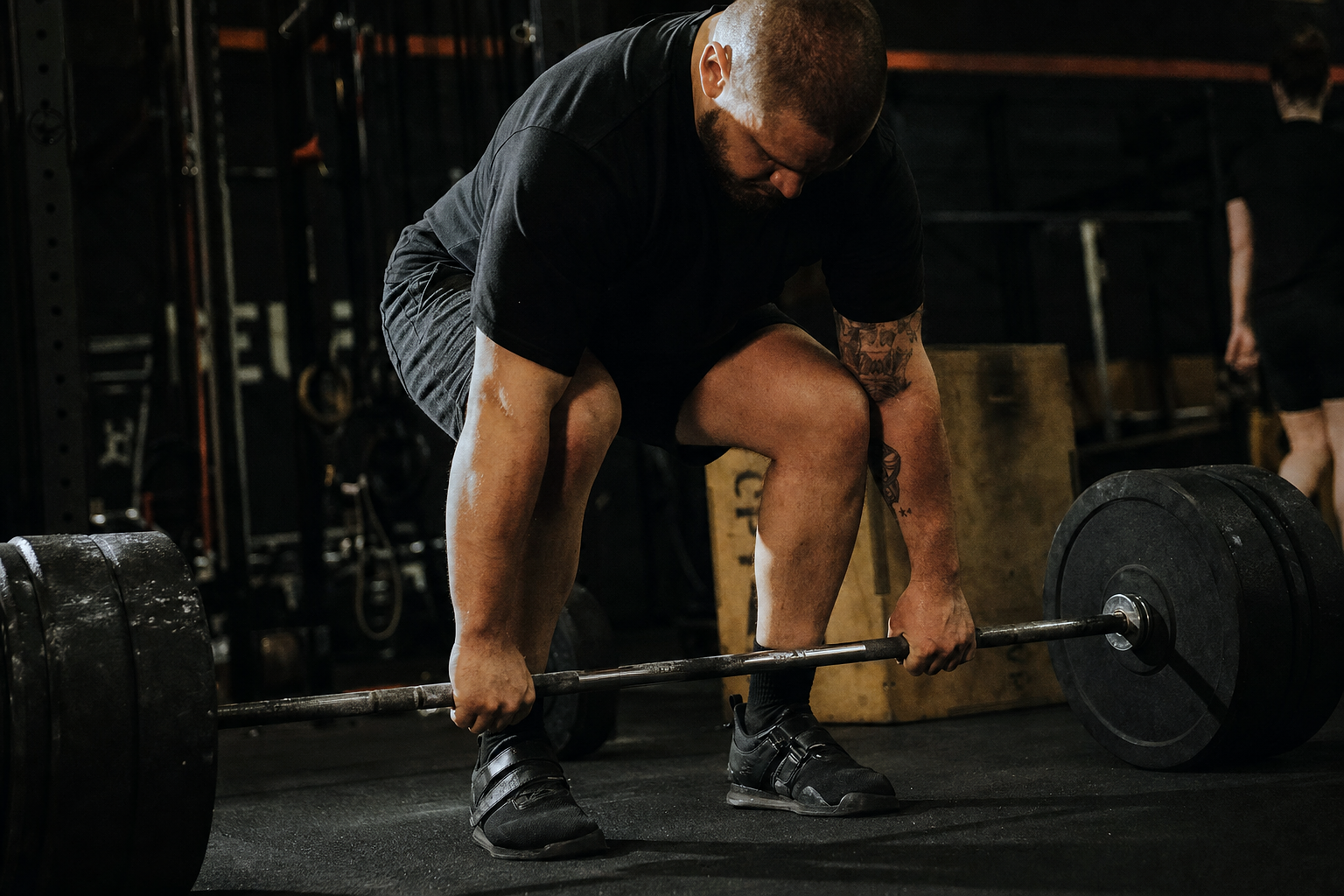
The deadlift goes up when you apply more force to the bar than it weighs. Simple in principle. Brutally specific in practice.
Here's the mechanism: your central nervous system learns to recruit more motor units simultaneously. More muscle fibers fire at once. The bar moves. Over time, your body also builds contractile tissue — actual muscle — which increases the ceiling of force you can produce. Both adaptations matter. Neither happens without progressive overload.
Progressive overload means adding stress faster than your body removes it. You lift a weight that's hard, recover, come back and lift something slightly harder. Repeat for years. That's the entire model.
The process breaks down into three stages:
1. Learn the pattern. The hip hinge, braced spine, lat engagement, leg drive — these aren't cues for show. They're the mechanical chain that transfers force from the floor to the bar. A broken chain leaks force. You pull harder but the bar doesn't care.
2. Load the pattern. Once the movement is solid, add weight systematically. Linear progression works first — add 5–10 lbs per session. When that stalls, move to weekly progression. When that stalls, monthly. The timeline stretches as you advance.
3. Support the adaptation. Training stress only produces strength if you recover from it. Sleep, protein intake, and total weekly volume all determine how fast you adapt. Undereating and undersleeping while trying to add weight to the bar is a losing trade.
Accessories — Romanian deadlifts, rack pulls, deficit work — address weak points in the chain. They're not the main lift. Treat them that way.
The deadlift doesn't respond to enthusiasm. It responds to consistent, measurable overload applied over months. Show up, add weight, recover. That's how the number goes up.
Common Questions About How to Increase Deadlift
How often should I deadlift to see progress?
Two times per week works for most intermediate lifters. Beginners can deadlift every session and recover fine. Advanced lifters sometimes pull heavy once a week and add a lighter technique day. More is not automatically better — recovery is where the adaptation happens.
Why is my deadlift stuck?
Usually one of three things: you're not adding weight systematically, you're not eating enough to support progress, or a technical breakdown is leaking force. Film yourself. Weak lockout usually means weak glutes. Slow off the floor usually means the bar is drifting forward. Fix the problem, not the symptom.
Should I use a belt?
Yes, once you're lifting serious weight. A belt isn't a crutch — it gives your core something to brace against and lets you produce more force. Learn to brace without one first so you understand what the belt is amplifying.
Is conventional or sumo better for building the deadlift?
Pull conventional unless you have a structural reason not to. It builds more posterior chain, transfers better to other lifts, and exposes weaknesses you need to address anyway. Sumo is a legitimate variation, not a shortcut.
How long does it take to add 50 pounds to a deadlift?
A true beginner can do it in 8–12 weeks. An intermediate lifter might need 6 months of focused work. Anyone who tells you otherwise is selling something.
Do I need to do accessories?
Yes. Romanian deadlifts, rows, and hip thrusts fill the gaps your competition lift leaves open.
Conclusion
Increasing your deadlift comes down to a short list of non-negotiable factors: consistent progressive overload, sound technique, enough food to actually recover, and sleep. That's it. There's no secret program hiding behind a paywall.
Pick a rep scheme, add weight when the reps are there, and pull every week. If your hinge pattern is sloppy, fix it before chasing numbers. A technical breakdown at 315 will follow you to 405.
A few hard truths worth keeping: most lifters undertrain, not overtrain. Most eat too little. Most change programs before any single program has time to work. Twelve weeks minimum before you judge anything.
Your next step is simple. Find your current one-rep max or a recent heavy triple. Run the math on a realistic twelve-week progression. Write the weights down. Show up and pull them. The deadlift doesn't respond to intention — only to work.
Learn more about Strength Programming.