Strength coaching is the practice of designing and supervising training to make you stronger. That's it. Not fitter in some vague, general sense — stronger. Measurably, verifiably stronger, with more weight moved over time. Everything else — body composition, athletic performance, injury resilience — follows from that base.
It matters because strength is the one physical quality that improves almost every other one. A stronger athlete runs faster, absorbs contact better, and recovers quicker. A stronger 60-year-old gets off the floor without thinking about it. The barbell doesn't care about your goals. It only records what you can actually do.
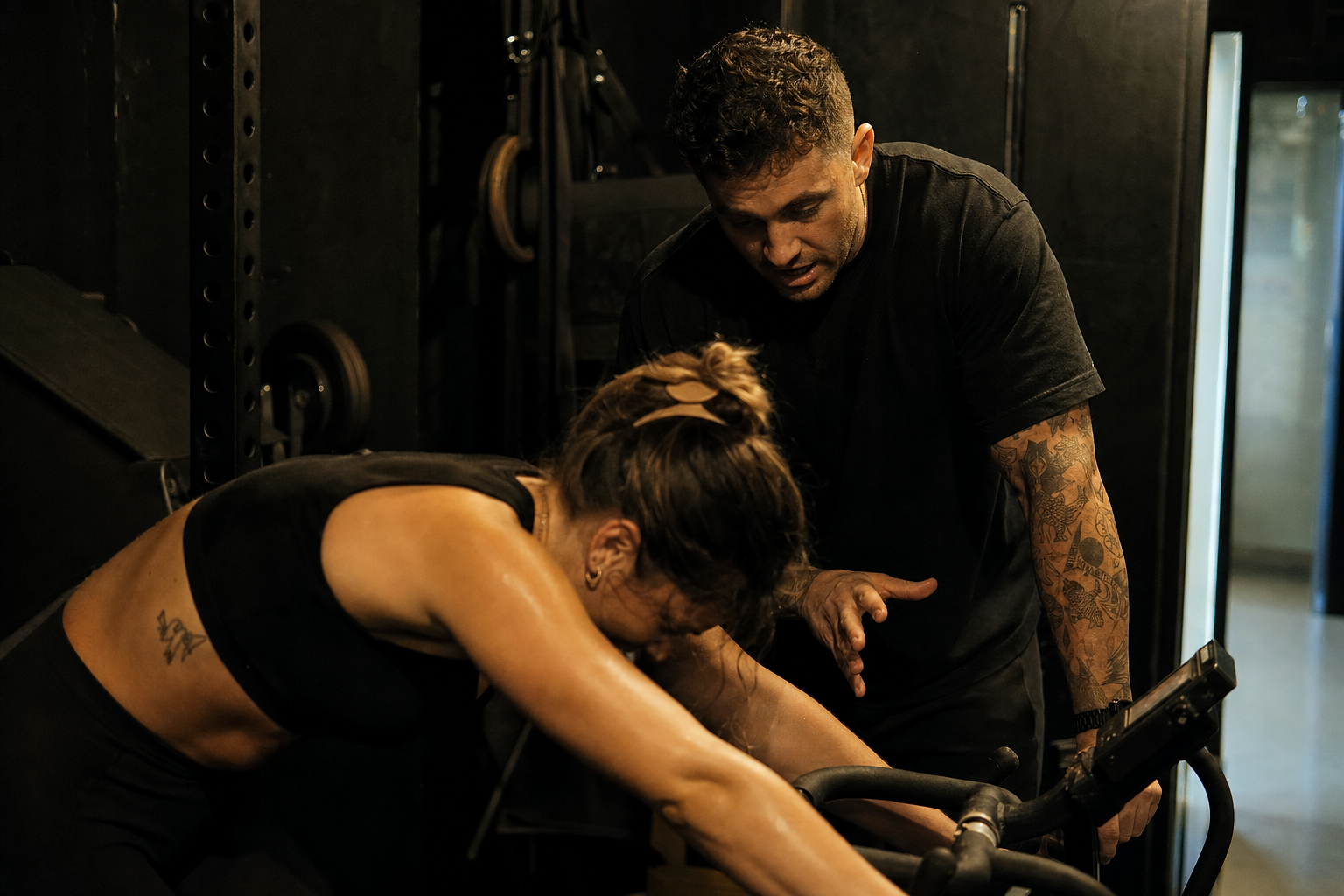
Good coaching accelerates that process by eliminating guesswork. A coach watches how you move, identifies what's limiting you, and builds a program around that reality — not around what worked for someone else. Bad programming wastes months. Good programming compounds. The difference between the two is usually a coach who knows what they're looking at.
What Is Strength Coaching?
Strength coaching is the systematic application of progressive overload to make you stronger. That's it. A coach watches you move, identifies what's limiting your progress, and prescribes training that fixes it.
The scope is broader than most people assume. Yes, it covers the barbell lifts — squat, deadlift, press, bench. But it also includes programming logic, recovery management, technique correction, and the less glamorous work of keeping you training when life gets complicated. A strength coach isn't just counting your reps. They're making decisions about load, frequency, and exercise selection based on how you're actually responding to training.
Context matters here. Strength coaching exists on a spectrum. At one end you have elite powerlifters and Olympic weightlifters with coaches who've spent decades in the sport. At the other end you have general population clients who want to be harder to kill — people who want to carry groceries, not blow their back out shoveling, and stay physically capable into their 60s and 70s. Both populations need the same foundational thing: a coach who understands how strength adaptations work and can translate that knowledge into a plan you'll actually follow.
What strength coaching is not: personal training where someone supervises your machine circuit and calls it a day. It's not motivation speeches. It's not programming pulled from an Instagram post and handed to you as a PDF.
It's a technical discipline. Treat it like one.
Key Benefits of Strength Coaching
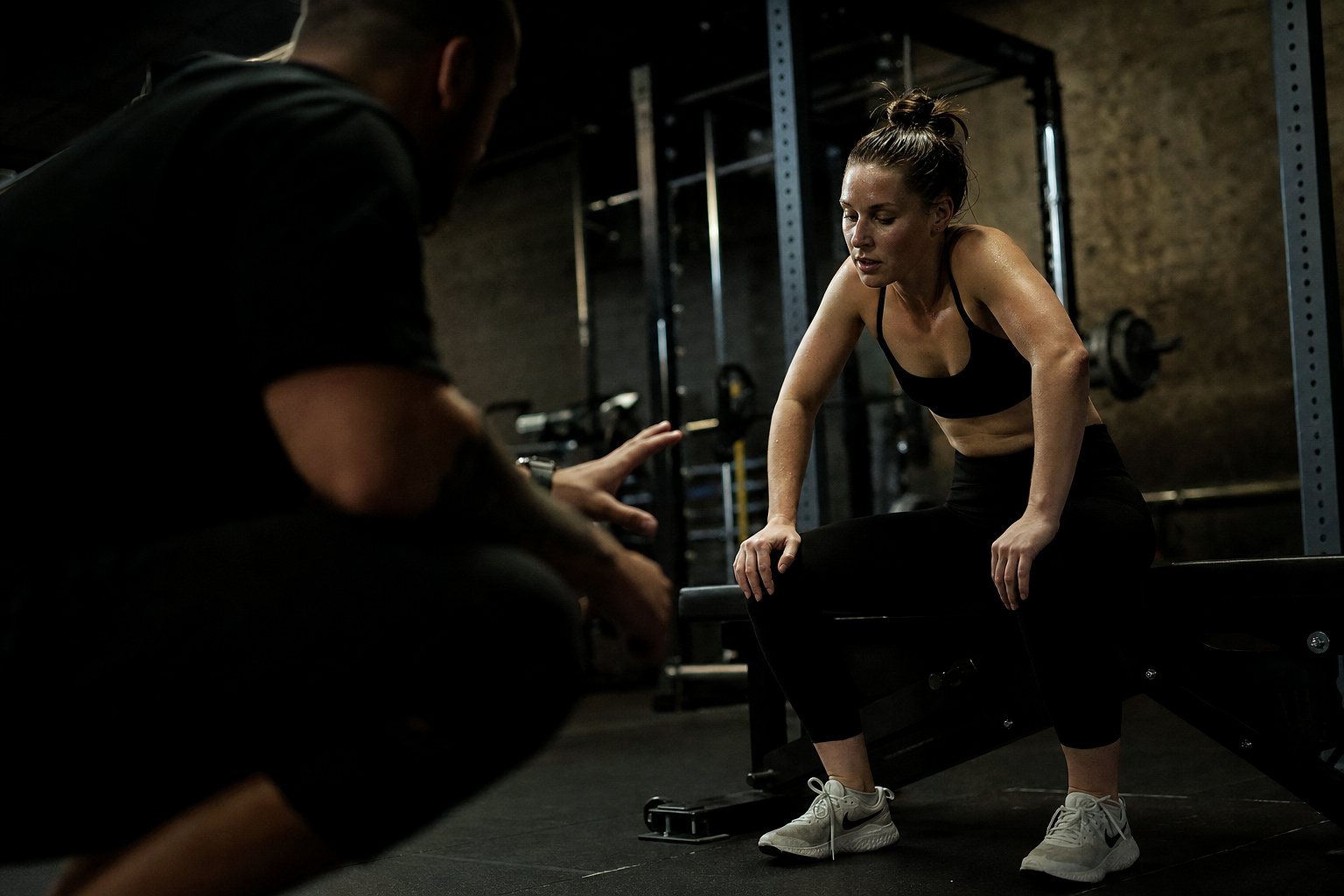
Most people who train alone plateau within a year. They repeat the same movements, load the same weights, and wonder why nothing changes. Strength coaching fixes that.
The first benefit is programming. A coach looks at where you are and builds a logical path to where you need to be. No guesswork. No random workouts pulled from the internet. The lifts go up because the plan was designed to make them go up.
Technique is the second one, and it matters more than most people want to admit. Poor squat mechanics don't just limit your numbers — they accumulate damage. A coach catches the forward lean, the collapsed knees, the early morning back. You won't catch it yourself. You can't see what you can't see.
Third: accountability. Showing up when you have a coach watching your log is different from showing up when no one cares. That's not a knock on your character. It's just how humans work. Use it.
Injury prevention deserves its own mention. Coaches know when to push and when to back off. Overreaching is a skill problem, not a toughness problem. A good coach keeps you training consistently for years, which is the only thing that actually builds strength long-term.
Finally, there's efficiency. Most trainees waste enormous amounts of time and effort on accessory work that doesn't move the needle. Strength coaching strips the program down to what produces results and cuts everything else. You get more out of fewer hours in the gym.
The compounding effect of all five — programming, technique, accountability, injury prevention, and efficiency — is why coached athletes outperform self-coached athletes at every level. That's not an opinion. Watch any serious lifting gym for six months and count the numbers yourself.
How Strength Coaching Works
You show up. You lift. You get stronger. That's the surface-level version. Here's what's actually happening.
A coach starts by assessing where you are. Movement quality, training history, current strength levels. This isn't paperwork — it's data collection. You can't program intelligently without a baseline.
From there, the coach builds a program around progressive overload. That means adding stress to the body in a controlled, incremental way. Add 5 pounds to the bar. Do one more rep. Cut rest periods. The specific method depends on your training age and the lift. A beginner can add weight every session. An intermediate lifter works in weekly waves. Advanced athletes plan months ahead.
Your body adapts to stress. That's the mechanism. You apply a training stimulus, recover from it, and come back slightly more capable than before. Miss the recovery piece and the adaptation doesn't happen. A coach manages that balance — pushing hard enough to force adaptation without driving you into the ground.
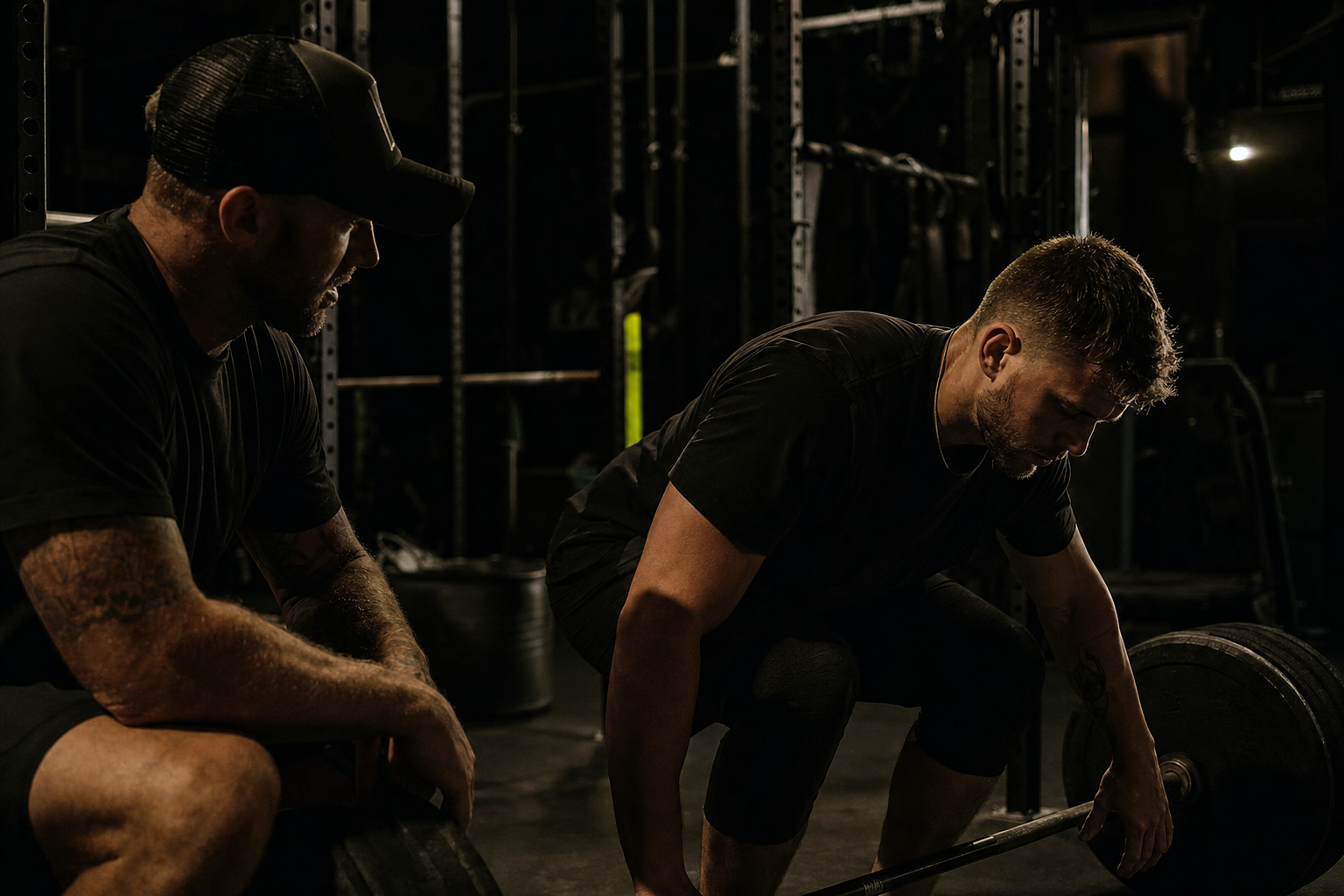
Programming is one part. The other part is technique. Poor mechanics limit how much load you can safely apply, which limits how strong you can get. A coach watches your squat, identifies the breakdown, fixes it. Now you can load the pattern heavier. More load, more adaptation.
Coaching also keeps you honest. Most people self-select easy workouts or skip the lifts they're bad at. A coach doesn't let that happen. The program is the program.
Accountability, technique, progressive loading, recovery management — these aren't separate services. They work as a system. Remove any one piece and results slow down or stop.
The process isn't complicated. But it requires consistency and someone who knows the difference between productive discomfort and injury risk. That's what you're paying for.
Common Questions About Strength Coaching
How often should I train? Three days per week works for most people starting out. Four days once you're intermediate. More is not better. Recovery is where adaptation happens.
Do I need a coach or can I just follow a program? A program tells you what to do. A coach tells you why it's not working. If your squat has been stuck for six months, you don't need a new program. You need someone watching you squat.
How long before I see results? Strength changes happen faster than you think. Most novices add weight every session for the first 8–12 weeks. Visible muscle takes longer — figure 3–6 months of consistent work before your clothes fit differently.
Is strength coaching only for competitive athletes? No. A 55-year-old who wants to carry groceries without wrecking their back is a more important client than most powerlifters. Strength training has the broadest applicability of any physical intervention available.
What's the difference between strength coaching and personal training? Personal training is often general fitness with a babysitter. Strength coaching is specific, progressive, and built around measurable performance outcomes. The squat goes up or it doesn't. There's no hiding behind vague effort.
How much does strength coaching cost? Ranges from $100 to $400+ per month depending on format — in-person, remote, or hybrid. It's less than physical therapy after you get hurt from training without one.
Conclusion
Strength coaching works because it removes guesswork. You follow a program built on sound principles, you add weight when the program tells you to, and you get stronger. That's the whole transaction.
The key points are simple. Progressive overload drives adaptation. Technique protects you and keeps you training. Recovery is where the gains actually happen. And a qualified strength coach accelerates all of it by cutting months of trial and error down to weeks.
You don't need perfect conditions to start. You need a barbell, a rack, and a program that isn't stupid.
Here's your next step: find a strength coach who programs around the big compound lifts and can explain why every exercise earns its place in your training. Ask them that question directly. If they stumble on the answer, keep looking.
The weight doesn't move itself. Start now.
Learn more about Strength Programming.